As a first-time reader of memoirs,
Our Little Secret by Emily Carrington drew me in with its unique illustrations and heart-wrenching story. Generally speaking, graphic memoirs sound interesting, but within a few pages, I could see how effective and engaging it could be — I was hooked immediately. Carrington displays her life through her drawings, showing us exactly what she went through, from her strange living situations to the eventual and tragic sexual abuse that she endured. We accompany Carrington as she revisits her trauma decades after it happened in order to further understand her heartbreaking childhood and her frustrating encounter with the legal system.
Our Little Secret tells the story of Emily Carrington as a teenager in Prince Edward Island. When her parents get divorced, Emily chooses to live with her father, which leads to many abnormal homes due to their unstable financial situation. Emily has to endure a harsh environment, being subjected to her father’s aggression and the cold winters that her home does little to protect her from. Richard, a neighbour and family friend, attempts to help by offering her a warm bed to sleep in, but her vulnerability and innocence become a victim to the horrific and disgusting acts of a predator.
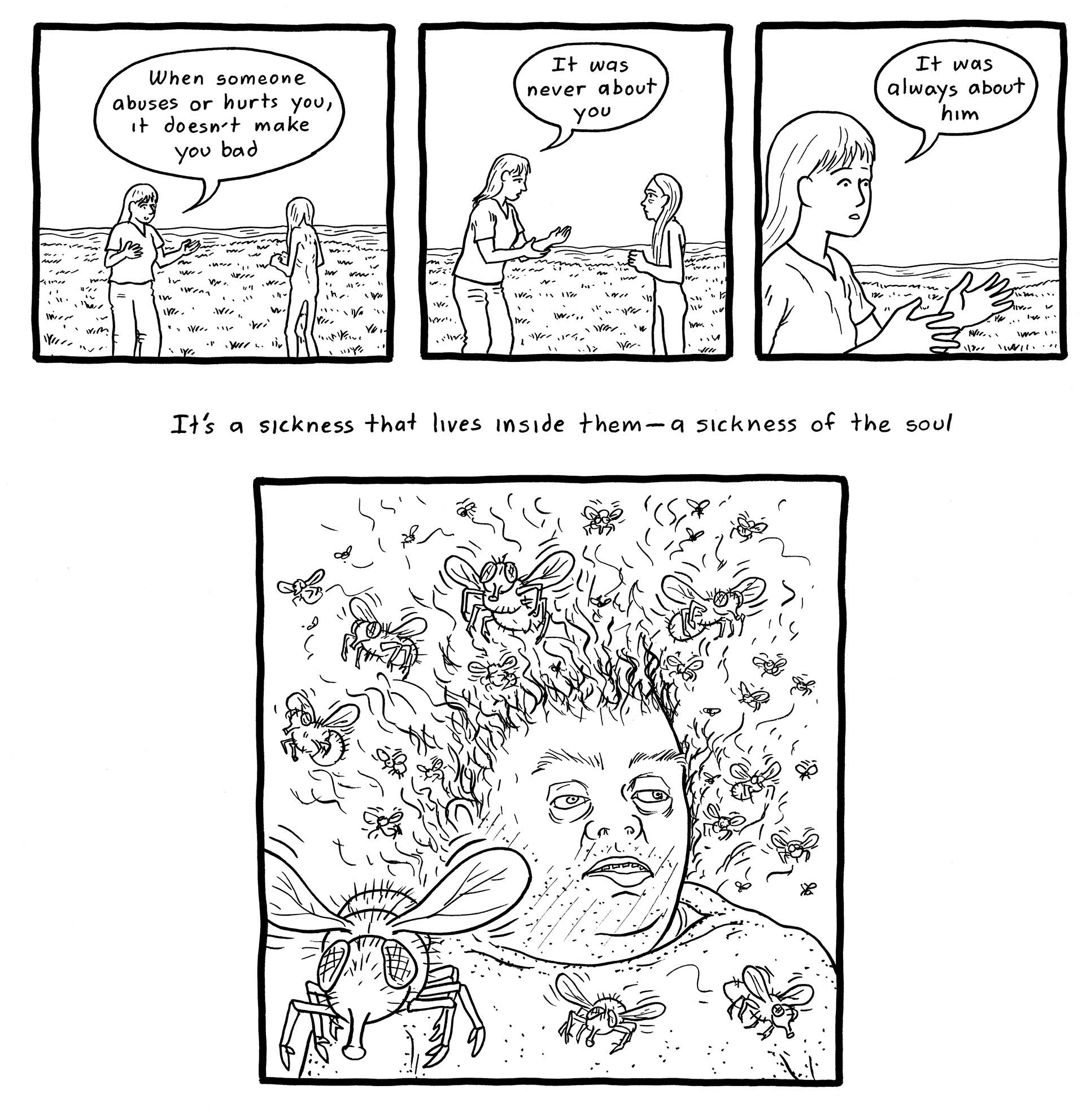
This beautifully designed memoir opens in the mid 80s, where we learn about Carrington’s relationship with her father — one of the key figures in her traumatic childhood. We start to understand the living situation that she’s in, especially the vivid descriptions and images of their ongoing fly problem or makeshift homes. Carrington’s abuse starts with her dad hiring Richard to help them build a log cabin. She sets up her story in a way that leaves us wanting more — giving us little hints without uncovering the whole truth until later. We learn about this log cabin and the close connection they have with Richard, leading to the realization that he isn’t just a side character in Carrington’s life. Instead, he’s a main character who still haunts the present in long-lasting and damaging ways.
This is by no means an easy graphic memoir to get through; it’s disturbing. However, its story resonated with me and I found myself on a rollercoaster of emotions throughout. The illustrations added an extra layer of depth as we weren’t only able to read the words of Carrington’s abuse, but we could
see it. It either makes us sympathize with her or have the strong urge to punch a wall due to the oblivious adults around her. The art style and layout of the illustrations add a unique touch to the way the story was told, and I particularly love the way that Carrington portrays her present self. Anytime she’s talking directly to the readers, she’s sitting at a table as if in an interview. This adds personality to the memoir as well as breaking up the intense story. The “interviews” made me feel as though Carrington and I were talking personally to each other. Even more so, it serves as a way to sit down and tell every detail without missing something. You’re put on the spot to say your piece. While I felt that the interview format allowed for a closer connection with Carrington and her readers, it also feels like a way to finally digest what happened to herself.
Read the rest of the review
here!