The New York Times | Elian Peltier | February 10, 2024

The New York Times reviews Aya: Claws Come Out
A Graphic Novel Finds a Relatable Hero in a Modern African Woman
One of the most successful African comics has no super heroes, and certainly no supernatural powers.
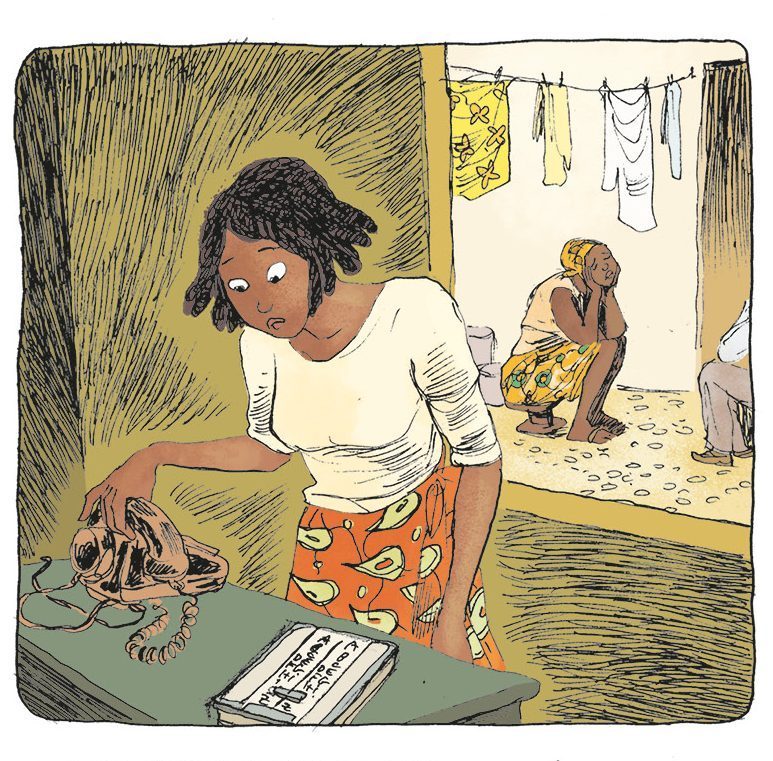
Instead, “Aya,” a graphic novel series, is full of everyday heroes, and topping the list is Aya herself, a young woman navigating the delights and obstacles of early adulthood in the West African nation of Ivory Coast.
Inspired by the childhood years that its author, Marguerite Abouet, spent in Ivory Coast and focused on daily life in a working-class suburb of Abidjan, the country’s largest city, the series mixes humor and biting takes on society, with a feminist twist — all vividly captured by Clément Oubrerie, the illustrator. In the books, Aya and her friends go on awkward first dates, hook up and share countless shenanigans that celebrate Ivory Coast’s favorite sport after soccer — “palabrer,” or talking endlessly.
The relatable characters help explain the instant acclaim “Aya” won from readers and critics when it was first released in France in 2005; the following year, it won the award for best debut at the Angouleme International Comics Festival, one of the world’s leading comic gatherings. The books have since been translated into 15 languages and attracted more than a million readers worldwide.
In recent years, “Aya” has enjoyed a revival among a new generation of readers, many from the French-speaking African diaspora. “For teenagers in France, Aya is so in,” Abouet said in a telephone interview from Paris, where she now lives. “They discover an African character who doesn’t see being Black, or a woman, as a hurdle, who has her friends and her convictions.”
In the United States, sales of the books went up during the George Floyd protests as American readers looked for fresh takes on racial issues and stories from Africa, said Peggy Burns, the publisher of Drawn & Quarterly, which publishes “Aya” in North America.
The most recent volume that’s English, “Aya: Claws Come Out,” was released this week — another sign that the series resonates well beyond its setting, the neighborhood of Yopougon in the 1970s and 1980s. Beyond the apparently light tone is a multilayered tale in which Aya and her friends struggle with unemployment and police violence, and fight for students’ rights and against sexual violence on campus.
Read the rest of the feature here!

Instead, “Aya,” a graphic novel series, is full of everyday heroes, and topping the list is Aya herself, a young woman navigating the delights and obstacles of early adulthood in the West African nation of Ivory Coast.
Inspired by the childhood years that its author, Marguerite Abouet, spent in Ivory Coast and focused on daily life in a working-class suburb of Abidjan, the country’s largest city, the series mixes humor and biting takes on society, with a feminist twist — all vividly captured by Clément Oubrerie, the illustrator. In the books, Aya and her friends go on awkward first dates, hook up and share countless shenanigans that celebrate Ivory Coast’s favorite sport after soccer — “palabrer,” or talking endlessly.
The relatable characters help explain the instant acclaim “Aya” won from readers and critics when it was first released in France in 2005; the following year, it won the award for best debut at the Angouleme International Comics Festival, one of the world’s leading comic gatherings. The books have since been translated into 15 languages and attracted more than a million readers worldwide.
In recent years, “Aya” has enjoyed a revival among a new generation of readers, many from the French-speaking African diaspora. “For teenagers in France, Aya is so in,” Abouet said in a telephone interview from Paris, where she now lives. “They discover an African character who doesn’t see being Black, or a woman, as a hurdle, who has her friends and her convictions.”
In the United States, sales of the books went up during the George Floyd protests as American readers looked for fresh takes on racial issues and stories from Africa, said Peggy Burns, the publisher of Drawn & Quarterly, which publishes “Aya” in North America.
The most recent volume that’s English, “Aya: Claws Come Out,” was released this week — another sign that the series resonates well beyond its setting, the neighborhood of Yopougon in the 1970s and 1980s. Beyond the apparently light tone is a multilayered tale in which Aya and her friends struggle with unemployment and police violence, and fight for students’ rights and against sexual violence on campus.
Read the rest of the feature here!