

Q&A: Zack Davisson on “KITARO”
Fangoria | Svetlana Fedotov | June 10, 2016
Fangoria | Svetlana Fedotov | June 10, 2016
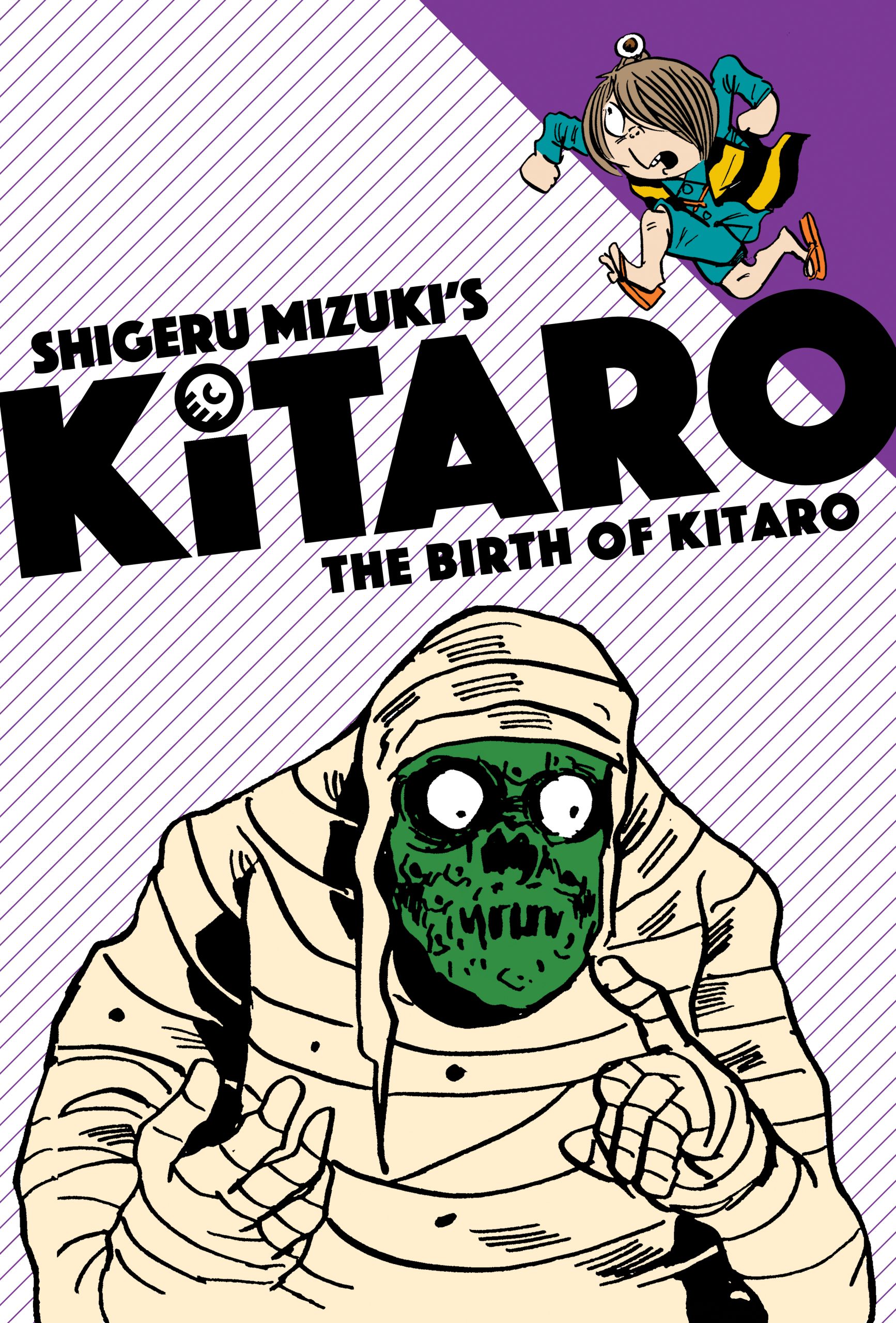
Zack Davisson has dedicated a majority of his professional life translating Japanese comics that most people have never heard of. Thanks to him, we get an unprecedented view into the works of some of the early comic creators that had helped shape modern manga and, in reference to Kitaro, modern Japanese horror and pop culture. Kitaro is currently on its first translated volume and focuses on the day in the life of a young yokai (monster) as he travels across Japan fighting other monsters. Fangoria recently got a chance to sit with the talented translator who helped us understand the national phenomenon that is the one-eyed monster boy.
FANGORIA: What attracted you to translating Kitaro?
ZACK DAVISSON: All the cool monsters, of course! Japan is already monster country, and nothing shows off the sheer multifariousness of monsters like Kitaro. It’s one of the most famous, most influential comics to ever come out of Japan. And that is a country with no shortage of cool comics.
I’ve been after Kitaro for a long time now. When I first moved to Japan, I went into this toy store that was filled with Shigeru Mizuki monsters and Kitaro toys. I thought they were just fascinating—the complete bizarre world that was cute/grotesque and like nothing I had seen before. And it was EVERYWHERE. I considered myself pretty Japan-savvy, but here was this entire world that I knew nothing about.
Right then and there I dove into Kitaro and Shigeru Mizuki as much as I could. The more I read, the more I loved it. I actually stood on a table one night at a friend’s bar and made a drunken vow that I would bring Mizuki and Kitaro to English. It’s my holy mission!
FANG: Kitaro— heck yokai in general– is huge business in Japan. Can you tell us a bit about the popular culture ofKitaro and yokai in Japan?
DAVISSON: It’s hard to explain just how popular Kitaro is in Japan. He is in the Mickey Mouse level of influence, and maybe beyond. He’s a cultural touchstone, and there is not a single living Japanese person of any age who doesn’t know Kitaro and Shigeru Mizuki. There are airports named after him, his birthplace is a Disneyland-type shrine to him. Kitaro’s face is stamped on every single product you can imagine, up to and including yokai toilet paper so you can study yokai while you poop.
Much of that is religion. Japan’s native religion of Shinto is filled with bizarre gods and monsters of every variety, and they are a constant presence in Japan. Statues of Jizo guard children on the way to school. Kappa appear on signs warning kids about dangerous river currents. Yokai are absolutely everywhere.
Kitaro serves as a sort of friendly face in this spooky world. He’s a relatable guide and teacher and friend, and I think that is part of his appeal. In a country that very much worships characters, Kitaro serves as a bridge to the past and the other, unseen world that is all around.
FANG: While Kitaro is definitely an all-ages book, a lot of the monsters and situations he deals with are very centric to Japanese society and folklore. Do you think this comic is accessible to English speaking children who just want pick up a comic about monsters or that it requires a bit of appreciation of Japanese culture to really get into it?
DAVISSON: I hope it is accessible! I personally think monsters have a universal appeal. You don’t need to be into Irish folklore or history to dig a banshee or leprechaun tale. Sure, you might gain a deeper appreciation if you know the background, but on some level we can all just enjoy a faceless monster or a mad demon cow.
I worked to make the translation as accessible as possible. I don’t want people flipping to translator notes or things like that. I hope people of any age can just pick it up and have fun with the outlandish world that Shigeru Mizuki created.
FANG: What kind of influence do you think early works like Kitaro have had on modern Japanese horror?
DAVISSON: That’s very hard to say. The influence is subtle, in that every horror writer and director grew up on Kitaroand on Mizuki’s works. His style permeates Japanese horror to such an extent that it is invisible. If you look at people like Junji Ito or Hideshi Hino, they are absolutely the apostles of Mizuki, even though they probably have more direct influence on modern horror than Mizuki himself.
But if you think of this world of monsters brushing up against humanity then that is Mizuki. Even in manga and pop culture—Mizuki wrote the original story that created the concept of what would later become Death Note, and he wrote the first giant monster / giant robot battle in his comic Raban, and created the genre that would turn into Pacific Rim.
FANG: You have translated a large amount of Kitaro’s creator, Shigeru Mizuki, work. Will we be seeing more volumes of his work, especially more Kitaro?
DAVISSON: We have seven volumes of Kitaro planned, and after that … I have a wish list of his works I want to get through. It is really up to readers. If they keep buying books and supporting the series, I promise we will keep making them! I sure hope so! There is still an ocean of amazing comics waiting to be translated!
FANG: With manga, especially the older ones, there is a lot of leeway in the meaning of the Japanese kanji language. How do you decide how you want to translate a certain symbol?
DAVISSON: That’s what makes translation an art, and not a science. It isn’t really about the particular character or words. I try not to be too precious about the exact words. My process is more emotional; I read the Japanese, and notice my own emotions and how the words made me feel. Then I try to make readers experience that same feeling using English. Literary translation is a writing job. You have to be a good writer in order to do it justice.
As to being older; sure, that is an issue sometimes. But one of the wonderful things about Kitaro is that the stories are rarely time-stamped. Both in language and style, they extend beyond the era in which they were written.
FANG: Aside from a couple oddballs, a majority of your translated were released anywhere from twenty to sixty years ago in Japan. Why are you so involved with older works?
DAVISSON: I really like that period of time in manga. That was the real “wild west” of manga, where there weren’t established styles or studies and the individual artist could really shine. It’s kind of like 70s cinema in the U.S. It was this rare time when the art and visual storytelling language was developed enough to be interesting, but not so beholden to sales and studios that everyone became carbon copies of each other.
People like Mizuki and Leiji Matsumoto—I don’t think they could do what they did now. I can’t imagine One Pieceartist Eichiro Oda taking a break from his comic to work on an intense biography of Kim Jong-un, or Naruto author Masashi Kishimoto doing an autobiography.
FANG: You have also written a book about Japanese ghosts called Yurei: The Japanese Ghost. What makes Japanese myths and legends so fascinating for you and what kind of research did you do for the book?
DAVISSON: I think all myths and legends are fascinating. I just happened to be living in Japan when I got my MA, so those are the ones I focused on. But Japanese legends in particular are interesting because of the way they are tied into daily life and religion. I lived in Scotland and studied Scottish folklore too, but there is a level of removal between your average Scottish person and fairy legends.
The persistence of the legends is amazing too. Like yūrei—they are almost invulnerable to the passage of time. Japanese people’s yūrei beliefs have remained almost unchanged across the centuries, and there shows no sign of that changing. The supernatural is very much alive in Japan.
FANG: What do you have in store for the future?
DAVISSON: I’m currently working on another horror comic, Black Museum: The Ghost and the Lady by Kazuhiro Fujita. That’s one of the most modern comics I’ve worked on, from 2014. I work on another supernatural horror comicWayward from Image Comics that everyone should be reading. I also have another classic manga, Queen Emeraldasby Leiji Matsumoto coming out in July, and a few more cool unannounced things too. Hopefully another book! We’ll see how things go!