

Graphic Content: Lockdown reading
The Scotland Herald | Teddy Jamieson | April 22, 2020
The Scotland Herald | Teddy Jamieson | April 22, 2020
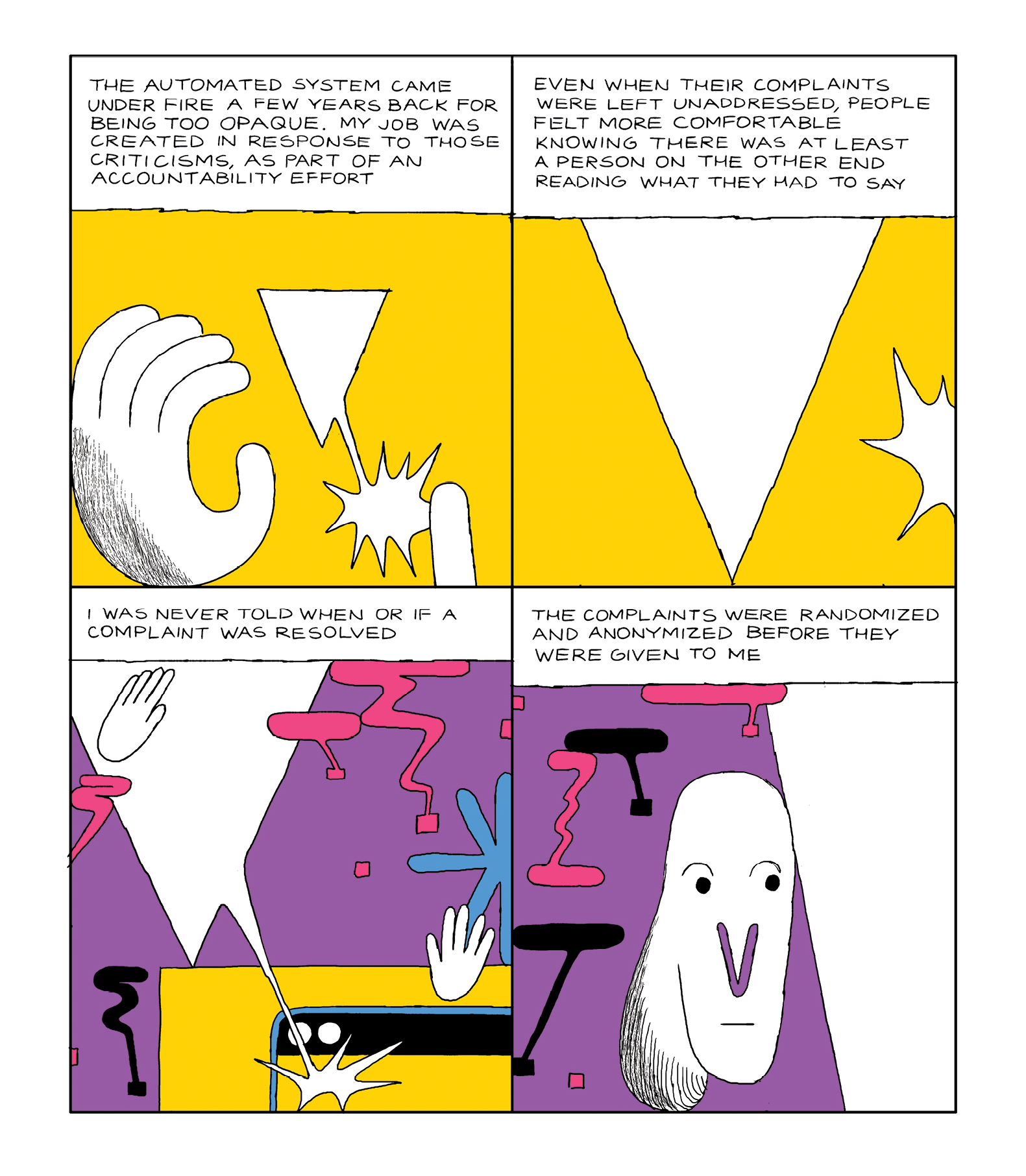
“A group of rogue cartographers had hijacked the automated map system to effect radical changes to the city’s geography.” The latest graphic novel by Canadian cartoonist DeForge is the usual mixture of bold, rubbery cartooning and psychedelic world creation, this time allied to an exploration of the interconnectedness of our world as reflected and refracted through De Forge’s distorting lens.
Set in a cartoon dystopia where everything from streets to bodies are constantly being “updated” to disorientating effect, Familiar Face is a carnival version of contemporary life, taking in body image, protest marches, terrorism and complaint culture: “Some days it was difficult to not come home with the impression that the world was populated with whiny crybabies.”What I love about DeForge’s work is its full-on cartooniness. He is not interested in providing a facsimile of real life.
Rather, he wants to create his own wild, weird, world. And yet it’s not hard to find ourselves in his strange, primary-coloured elastic linework. He catches the strangeness of life and beams it back at us with the weirdness out in the open. As a result, Familiar Face is primed for cult status.
Umma’s Table, Yeon-sik Hong, Drawn & Quarterly, £18.99
A follow-up to his English language debut Uncomfortably Happily, Yeon sik-Hong gives us another slice of family drama that builds slowly and carefully, mixing funny animal a rt with finely rendered visions of nature. Umma’s Table is the story of graphic novelist Madang and his family who have just moved to the countryside and are discovering a new way of life. But they can’t totally escape the city. Madang is constantly drawn back to Seoul to see his ageing parents who live in a dingy basement (echoes of the film Parasite). His father is an alcoholic, his much-loved mother is seriously ill. Madang spends the book pulled between his parents and his wife and child, between past and present.
Umma’s Table reframes the funny animal genre in comics as a site for social realist drama. It’s a book about food and family and new beginnings and old ties. And it’s about the complexities of love within the family unit. At times, it’s deeply sad. The scenes in South Korean hospitals are often traumatic (and have an uncomfortable resonance right now in the midst of this pandemic). It’s at times painful to read. And yet the attention to detail, the careful layering of story and memory has a cumulative power and a bravura sequence near the end where sik-Hong weaves loss and memory, then and now, all together is heartbreaking and deeply impressive.